
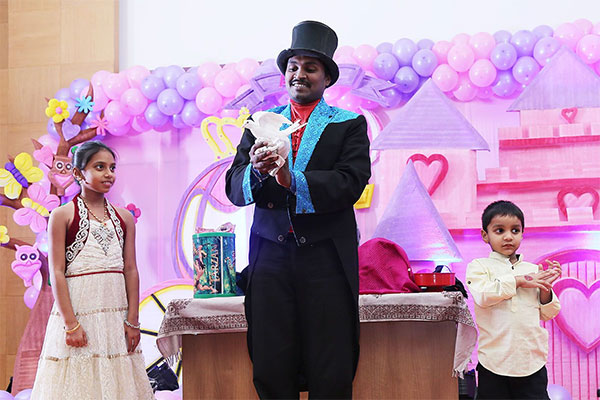
A magic show is a captivating and enchanting form of live entertainment that has been thrilling audiences for centuries. It features a magician, often dressed in elaborate attire, who performs a series of astonishing tricks, illusions, and sleights of hand to mystify and amaze the audience.
Illusions: Magicians create optical illusions that defy the laws of physics, making objects disappear, levitate, or change form before the audience's eyes.
Sleight of Hand: Magicians are known for their dexterity and quick hands, performing intricate maneuvers to manipulate objects with skill and precision.
Audience Engagement: A great magician engages the audience by involving them in the performance, whether through participation in a trick or through humor and storytelling.
Mystery and Surprise: The element of surprise is central to a magic show. Audiences are left wondering how the tricks are performed, adding an air of mystery to the performance.
Props and Equipment: Magicians use an array of props, including cards, coins, hats, and more, to create their illusions. Some even employ elaborate stage setups and equipment.
Storytelling: Many magic shows incorporate storytelling, where tricks are woven into a narrative that keeps the audience engaged and invested in the performance.
Variety: Magic shows can encompass a wide range of styles, from classic stage magic to close-up magic performed at tables. Some magicians specialize in specific types of magic, such as mentalism or escapology.
Entertainment Value: Above all, magic shows are designed to entertain and provide a sense of wonder and joy to audiences of all ages.
Magic shows have a universal appeal and can be enjoyed by people of all backgrounds and cultures. They continue to evolve with the times, incorporating technology and innovation while preserving the timeless charm of magic. Whether in a grand theater, at a private event, or on television, a well-executed magic show is a memorable and enchanting experience that leaves audiences spellbound.